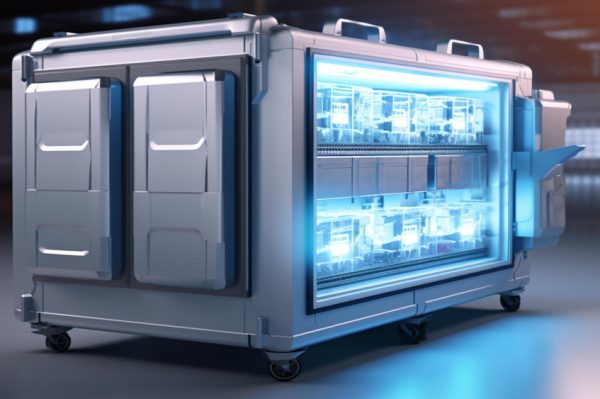







A comprehensive guide to understanding, identifying and resolving faults in Thermo King, Carrier and other on-board refrigeration systems.
Truck refrigerators play a crucial role in temperature-controlled transport. They guarantee the freshness and safety of perishable goods such as foodstuffs, pharmaceuticals, flowers and chemicals. A refrigeration unit breakdown can be very costly, both in terms of lost goods and logistical delays.
To reduce risks, it is important to understand the most common faults, of recognize their symptoms and above all quickly diagnose their origin.
In this article, we list the most frequent breakdowns, their detailed causes and the solutions to resolve them.
For rapid replacement of defective parts, you can rely on Frigo Parts :
➡️ https://www.frigo-parts.com/
1. The fridge no longer produces enough cold: the most common fault
This is undoubtedly the most frustrating breakdown: the refrigeration unit runs, but the temperature doesn't drop, or drops far too slowly.
Symptoms developed
- The indoor temperature display does not drop below the setpoint.
- The group seems to be running longer than usual, with no results.
- The evaporator fan turns but blows lukewarm air.
- Load begins to lose freshness or excessive condensation.
- The truck takes two to three times longer to reach the target temperature.
Possible causes
- Lack of refrigerant
- Very often linked to a leak.
- The compressor no longer reaches the pressure required to produce cold.
- Performance drops progressively.
- Tired or end-of-life compressor
- Abnormal noises.
- Insufficient flow.
- Over-consumption of energy.
- Blocked or maladjusted expansion valve
- The fluid is not expanding properly.
- Cold is produced poorly or not at all.
- Saturated or clogged dryer
- The circuit is clogged.
- Moisture freezes in the circuit, causing a blockage.
- Evaporator fans faulty
- Cold air is no longer distributed.
- Even good heat exchange becomes ineffective.
Detailed diagnosis
- HP/BP pressure control
- Identifies a lack of fluid or a tired compressor.
- Identifies a lack of fluid or a tired compressor.
- Visual inspection of refrigeration circuit
- Oil stains = probable leak.
- Check hoses, seals, fittings and condensers.
- Fan test
- Check that they are running at the right speed.
- A slow fan can be enough to bring down performance.
- Checking exchanger cleanliness
- Condenser full of dust = major cooling problem.
- A simple cleaning can sometimes restore the cold.
Need parts to restore the cold?
Pièces frigorifiques - Frigo Parts
2. Compressor no longer starts: critical fault
The compressor is the main component of the refrigeration system. If it fails to start, there will be no absolutely no cold.
Symptoms developed
- The group emits a «click» without launching.
- No mechanical noise: total silence.
- The fans can run, but not the compressor.
- The system can display pressure-related alarms.
- Cold does not occur at all, even after several minutes.
Possible causes (developed)
- Power failure
- Fuse blown.
- Faulty relay.
- Oxidized connector.
- Severed wire harness.
- Compressor motor burnt out
- May occur after overloading.
- No maintenance (oil).
- Natural wear and tear.
- Pressure switch activated
- Pressure too low or too high.
- Safety device prevents start-up.
- Electronic board problem
- Poor communication.
- Incorrectly transmitted orders.
- Software bug.
Detailed diagnosis
- Voltage and power supply test
- Checking fuses and relays
- HP/BP pressure switch control
- Starting current measurement
- PCB inspection
To replace a compressor, pressure switch or relay :
See compressors and engine parts - Frigo Parts
3. Frequent alarms on refrigeration unit: sign of internal malfunction
Thermo King and Carrier units are equipped with a self-diagnosis system. An alarm must not never be ignored.
Symptoms
- Alarms displayed at regular intervals.
- Untimely unit shutdowns.
- Unstable temperature.
- Multiple error codes.
Possible causes
- Faulty sensors
- Return air sensor.
- Evaporator probe.
- Ambient sensor.
- Electrical problem
- Poor contact.
- Oxidation.
- Short circuit.
- Pressure variations
- Excess refrigerator load.
- Escape.
- Partial circuit obstruction.
- Electronic fault
- Altered motherboard.
- Software problem.
Detailed diagnosis
- Read alarm code
- Test each sensor individually
- Check wiring integrity
- Check actual pressures and temperatures
Sensors, probes, harnesses :
Sensors and probes - Frigo Parts
4. Over-consumption of fuel: sign of a tired group
Refrigeration units consume more energy when they operate abnormally.
Symptoms
- More frequent refuelling.
- Continuous operation even with light loads.
- Audible overventilation.
Possible causes
- Clogged filters
- Dirty air filter
- Clogged fuel filter
- Oil filter saturated
- Inefficient refrigeration cycle
- Leak
- Weak compressor
- Poor relaxation
- Engine problem
- Poor combustion
- Weak glow plug
- Dirty injector
- Dirty exchangers
- Condenser clogged
- Dirty evaporator
Detailed diagnosis
- Complete cleaning of exchangers
- Filter control
- Refrigerator cycle analysis
- Fridge load check
Service kits, filters, engine parts :
Consumables and filters - Frigo Parts
5. Abnormal noises: alert immediately
A refrigeration unit needs to run relatively quietly. Unusual noise is often a sign of mechanical failure.
Symptoms developed
- Regular clicks.
- Continuous squeaking.
- Air hissing.
- Amplified vibrations.
- Metallic noise.
Possible causes (developed)
- Worn pulley or bearing
- Risk of breakage.
- Risk of breakage.
- Fan out of balance
- May cause internal breakage.
- May cause internal breakage.
- Loose motor mount
- Heavy vibration.
- Heavy vibration.
- Pressurized leak
- Whistling noise.
- Whistling noise.
- End-of-life compressor
- Characteristic metallic noise.
- Characteristic metallic noise.
👉 Fans, pulleys, belts :
Mechanical parts - Frigo Parts
6. Difficulty reaching or maintaining target temperature
Even without a major breakdown, a unit may have difficulty stabilizing the temperature.
Symptoms
- Temperature rising and falling for no reason.
- Excessive heating or cooling.
- Abnormally long descent time.
- Significant differences between set and actual temperatures.
Possible causes
- Faulty probe
- A faulty probe gives the wrong information to the system.
- A faulty probe gives the wrong information to the system.
- Insufficient ventilation
- Tired or broken fan.
- Tired or broken fan.
- Icing on evaporator
- Poor air circulation.
- Insufficient defrosting.
- Incorrect regulator setting
- Excess or lack of fluid in evaporator.
Expansion valves, probes, fans :
Control elements - Frigo Parts
7. Refrigerant leaks: a serious problem
A leak results in a total loss of refrigeration capacity.
Symptoms developed
- Frost in some areas.
- Oily spots on the circuit.
- Abnormal pressure.
- Progressive then sudden loss of cold.
Possible causes
- Crack in a hose
- Condenser with holes
- Corroded evaporator
- Loose fitting
- Schrader valve defective
Hoses, valves, condensers, evaporators :
Parts du circuit frigo - Frigo Parts
8. Electrical failures: a frequent cause of downtime
Today, electronic systems control almost all fridge functions.
Symptoms developed
- Complete stop of the group.
- Electrical error message.
- Black screen.
- Components that light up and then go out.
Possible causes
- Battery too low
- Cable cut or severed by vibration
- Oxidation of connectors (very frequent)
- Faulty circuit board
- Sensor short-circuited
Anticipate to avoid breakdowns
Truck refrigeration units are complex machines, exposed to difficult conditions: damaged roads, climatic variations, vibrations, long operating hours...
That's why breakdowns are common, but often avoidable.
By carefully monitoring symptoms and quickly diagnosing any anomalies, you can extend the life of your refrigeration unit and avoid major financial losses.
And if you need to replace a faulty part quickly, rely on a specialist in the sector:
➡️ https://www.frigo-parts.com/
Complete Thermo King & Carrier catalog: engine, refrigeration, electrical and electronic parts, filters, consumables...