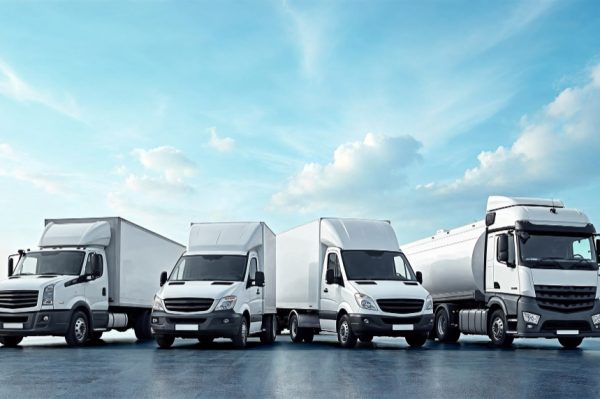






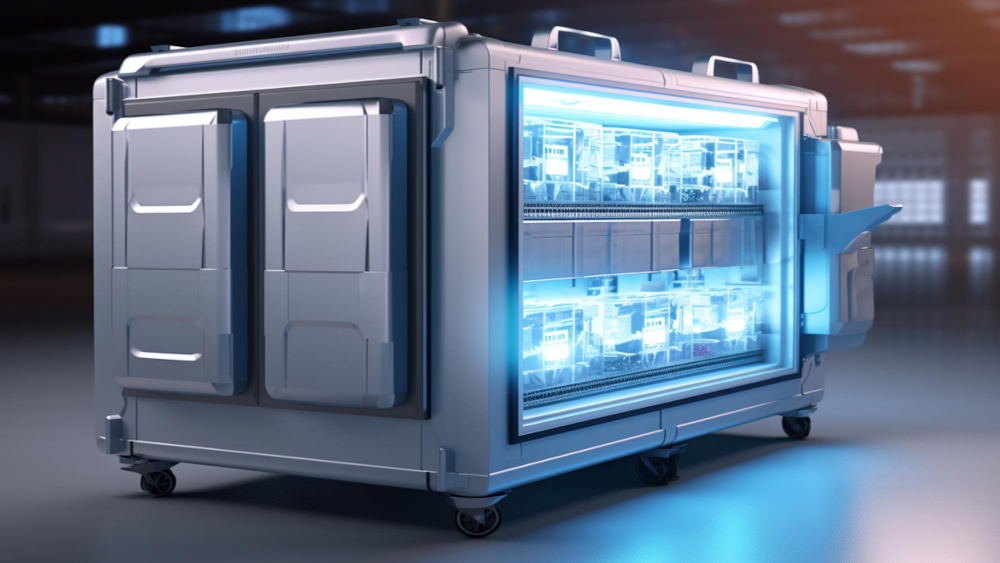
Refrigerated transport relies on one essential element: the refrigeration unit. This system maintains a controlled temperature in the body of a truck, semi-trailer or van, ensuring the preservation of foodstuffs, pharmaceutical products or flowers.
But not all refrigeration units work in the same way. Today, three main technologies coexist:
- Diesel refrigeration units, historical and still widely used.
- Electric refrigeration units, These are booming, thanks to the development of batteries and environmental constraints.
- Hybrid refrigeration units, which combine the energy of the truck with that of an autonomous motor.
Understanding their differences, advantages and limitations is essential to choosing the right solution for your business. This comprehensive guide will help you make the right choice.
1. The diesel refrigeration unit: the traditional, robust solution
Diesel refrigeration units are the most widespread technology used in temperature-controlled transport, particularly on long-haul trailers and semi-trailers.
It is powered by a small independent combustion engine, usually located at the front of the body.
1.1 Operation of a diesel refrigeration unit
The principle is simple:
The diesel engine drives the compressor, which compresses the refrigerant to produce cold. The system operates even when the truck is stationary, making it ideal for long loading operations, waiting times or logistics parking lots.
It is also possible to use the group in electric stand-by mode by connecting the equipment to the mains, to avoid consuming fuel.
1.2. Advantages of the diesel refrigeration unit
1. Total autonomy
The unit's diesel engine operates independently of the truck.
Even with the engine off, cold continues to be produced.
2. High cooling capacity
It offers excellent cold production capacity, suitable for large cases or sensitive loads.
3. Resistance to extreme conditions
Diesel generators are ideal for hot and cold climates and long distances.
4. Spare parts availability
All brands (Carrier, Thermo King, Zanotti...) have been using this technology for a long time.
Parts are easy to find, including compressors, filter driers, electronic boards, capacitors, etc.
1.3. Limits of the diesel refrigeration unit
1. Pollution and strict regulations
The diesel engine generates :
- CO₂
- NOx
- Fine particles
Environmental standards are becoming increasingly stringent in Europe.
2. Noise
Diesel refrigeration units are relatively noisy, which is a problem in urban and residential areas.
3. Maintenance costs
A dedicated combustion engine implies :
- emptying,
- filters,
- settings,
- fuel controls,
- replacement of wearing parts.
4. Fuel costs
Consumption can be high, especially in summer or during long waiting periods.
2. The electric refrigeration unit: the clean, quiet solution
With the evolution of battery technologies and environmental requirements, the refrigeration unit 100 % electric is booming, especially for light commercial vehicles and urban deliveries.
2.1. Operation of an electric refrigeration unit
It runs on electricity supplied by :
- truck batteries (for electric vehicles),
- batteries dedicated to the refrigeration unit,
- external power supply (charging points, mains).
The electric compressor replaces the mechanical compressor driven by an internal combustion engine.
2.2. Advantages of electric chillers
1. Zero direct emissions
The group emits no CO₂, NOx or particulates.
This is the most environmentally-friendly solution.
2. Silent operation
Its extremely low noise level is ideal for :
- night-time deliveries,
- residential areas,
- city centers.
3. Low maintenance
There is no diesel engine.
So no oil changes, no engine filters, and fewer moving parts.
4. Suitable for electric vehicles
Urban fleets are increasingly switching to 100 % electric to comply with Low Emission Zones (ZFE).
5. Reduced energy costs
Electricity is still cheaper than fuel, especially for short journeys.
2.3. Limits of the electric refrigeration unit
1. Limited autonomy
The group depends on battery capacity.
Over long distances, this is a constraint.
2. Recharging required
Charging infrastructures are not always available, especially when roaming.
3. Less powerful than diesel
It is best suited to light commercial vehicles, small rigids and urban distribution.
4. High purchase price
The technology is more expensive, although it is gradually paying for itself.
3. The hybrid refrigeration unit: versatile and economical
The hybrid refrigeration unit combines the advantages of diesel and electric power.
It's a dual-mode system able to function :
- with an autonomous diesel engine,
- or from the truck's power supply,
- or in mains stand-by mode.
This technology is increasingly used by transport companies seeking to cut costs while retaining a high degree of autonomy.
3.1 How a hybrid refrigeration unit works
The system automatically switches between :
- electricity (via alternator, battery or mains),
- diesel (if you need more power or longer autonomy).
Some advanced versions use energy recovered during braking (“kinetic” technology).
3.2. Advantages of the hybrid fridge
1. Reducing diesel consumption
Some of the cooling can be produced free of charge using electricity.
2. Quiet operation in town
In electric mode, the unit significantly reduces noise pollution.
3. Power available in diesel mode
In hot weather, on long journeys or when extra power is needed, the internal combustion engine ensures continuity.
4. Flexibility of use
The truck adapts automatically:
- urban delivery → electric
- long-distance → diesel
5. Progressive ecological transition
The hybrid choice enables a gradual reduction in pollutant emissions, with no constraints on autonomy.
3.3. Limits of the hybrid refrigeration unit
1. More complex systems
The combination of the two technologies makes :
- more complex maintenance,
- longer diagnosis,
- more expensive parts.
2. High acquisition price
This is the most expensive technology on the market.
3. Need for trained technicians
Refrigeration engineers need to master diesel, electrical and electronic circuit boards.
4. Which type of refrigeration unit is right for your business?
Each type of group is suitable for a specific purpose.
Here are the recommendations according to the type of operation:
Long-distance transport (France - Europe)
→ Diesel or hybrid unit
Need autonomy, power and robustness.
Urban delivery / EPZ / local tours
→ Electric or hybrid unit
Silence + ecology + adapted autonomy.
Highly demanding pharmaceutical transport
→ Hybrid or recent low-emission diesel
Need stability and reliability in all conditions.
Multi-temperature distribution
→ Hybrid
Frequent switching between city and road: flexibility is essential.
Small refrigerated vans (under 3.5 t)
→ Electric
Short distances, cities, maximum energy efficiency.
Conclusion
The refrigerated transport market is evolving rapidly. Between environmental requirements, urban constraints, cost optimization and the quest for performance, each refrigeration unit technology (diesel, electric, hybrid) is finding its place.
To sum up:
- Diesel fuel remains the benchmark for power and autonomy.
- Electric is becoming a must for city dwellers and for companies seeking to reduce their environmental impact.
- The hybrid represents an ideal compromise, combining performance, range and reduced fuel consumption.
The choice therefore mainly depends on :
- your journeys,
- your type of merchandise,
- your area of operation,
- your environmental policy,
- and your budget.